
Indonesia and Thailand share fascinating similarities in the field of healthcare. Both Southeast Asian countries possess rich local wisdom in traditional and herbal medicine. Recognizing the importance of this heritage, the Thai government established the Center of Applied Thai Traditional Medicine (CATTM), an institution with four main missions: education, research, academic services, and the preservation of Thai culture in traditional medicine.
To enhance students’ knowledge of traditional medicine and expand their international network, the Master of Public Health Program at Diponegoro University sent its students on a study visit to CATTM from August 24 to 27, 2024. This two-day program included lectures, discussions, and field visits to better understand the strategies and implementation of traditional medicine services in Thailand.
Day 1: Lectures and Discussions
Upon arrival at CATTM, students registered and were introduced to the facilitators. The lecture session focused on how traditional medicine is applied in healthcare services in Thailand. CATTM places great emphasis on every aspect of traditional medicine development, ensuring that it evolves effectively and is accepted as a preventive and rehabilitative healthcare practice in Thailand.
Additionally, CATTM shared insights on how traditional healthcare facilities in Thailand operate, including the management of herbal medicine availability and the provision of various healthcare services tailored to community needs.
Day 2: Field Visits
Students from the Master of Public Health Program at Diponegoro University had the opportunity to visit traditional medicine facilities in Thailand. They observed firsthand the implementation of traditional medicine services and the production process of herbal medicines. This learning visit provided invaluable experience and deepened their understanding of how traditional medicine is integrated into Thailand’s healthcare system.
Traditional medicine is not only a cultural heritage but also an important scientific field. When properly managed, it can coexist with modern medicine to promote better public health outcomes.
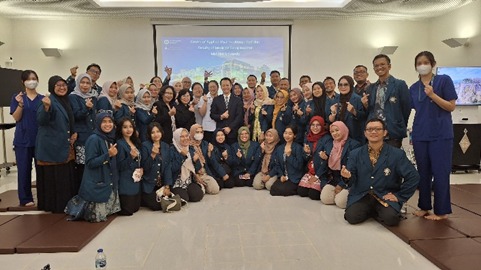
Student Testimonials from the Visiting Lecture at Siriraj Piyamaharajkarun Hospital (SiPH), Mahidol University
-
“The benefits of this experience were invaluable. First, we gained insights into how Thai traditional medicine started with a core value—ensuring health and well-being for the community through non-profit services—which eventually led to strong government support. Second, it broadened our perspective on how Western medicine and traditional medicine can work synergistically, complementing each other. Third, Thailand has long incorporated traditional medicine into its medical education curriculum, ensuring that healthcare professionals are well-versed in both approaches.”
— Teuku Reza Fadly, AKK, 2023 -
“I was thrilled to have the opportunity to participate in a residency at the Center of Applied Thai Traditional Medicine, Siriraj Hospital, Mahidol University. We learned about the history of Thai Traditional Medicine and how it successfully integrates with Western Medicine, supported by government policies and certification programs. Additionally, we gained hands-on experience in Thai Traditional Medicine applications and the herbal manufacturing process. This was an incredibly valuable learning experience for me.”
— Novi Erliyani, AKK, 2023 -
“This was a new and eye-opening experience, where Eastern and Western medicine converge and complement each other. It was truly remarkable to see how this integrated approach can serve as a model for healthcare services in Indonesia.”
— Agus Riyanto, ARS Kajen, 2023
This international learning experience has enriched students’ knowledge and broadened their global perspective, reinforcing the importance of collaboration between modern and traditional medicine in improving public health.